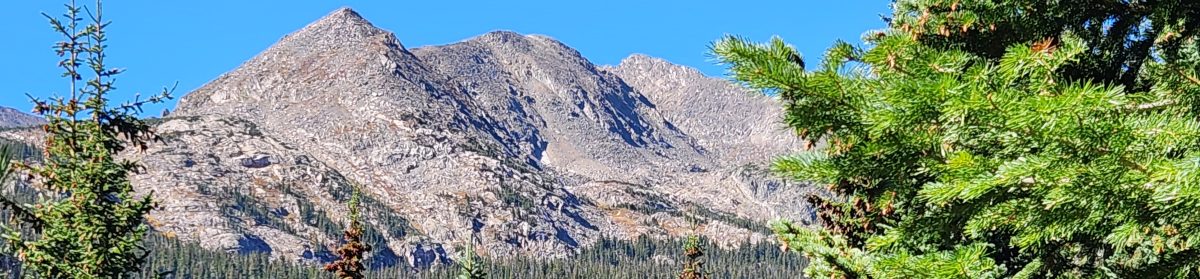
The Boulder County Public Lands Collaborative is made up of the following autonomous groups/organizations sharing their unique perspectives on issues related to public lands in Boulder County, Colorado.
MEMBER ORGANIZATIONS:

Earthwork Conservation Planning
The Environmental Group (recently merged with Magnolia Forest Group)

High Country Forest Watch
Save Boulder Parks & Trails
FALL 2025 TOPIC:
Town of Nederland’s Acquisition of Eldora Ski Resort

Photo: Denver Post
Eco-Integrity Alliance comments:
Eco-Integrity Alliance’s concerns with the purchase of the Eldora Ski Resort by the Town of Nederland deal primarily with potential increased impacts on public lands and wildlife, watersheds, and the sensitive upper montane and subalpine forest ecosystems therein. We, therefore, ask the Town of Nederland to please consider any and all feasible actions it might take to reduce such impacts, rather than exacerbate them.
Eldora is not only adjacent to the Roosevelt National Forest, several acres of the resort fall inside the National Forest boundary, as detailed in its U.S. Forest Service special use permit. This means whoever owns Eldora has an obligation not just to local residents but all Americans who lay claim to such federal public lands.
With this in mind, Eco-Integrity Alliance asks the Town of Nederland to please commit to the following three actions:
1) No more cutting trees on public lands
This prohibition would include any potential expansion of the ski area into National Forest or reopening of closed ski routes on public lands.
2) No construction of new trails on public lands
While access to public lands is important to many of us, Nederland area trails are already overcrowded, which negatively impacts wildlife and forest ecology, as well as exacerbating air pollution and carbon emissions through numerous vehicle trips. There are countless other trails in the area for those who want to explore aside from the over-used ones in proximity to Eldora, namely, the Hessie Trail into Indian Peaks Wilderness.
3) Democratic public process on potential impacts, including from summer recreation
The idea of opening up public access over the summer to existing National Forest trails, specifically Jenny Creek (as opposed to only in the winter, as is currently the case), has many potential negative impacts.
Hikers, anglers, hunters, and mountain-bikers all have a measurable footprint on the land and the species who live here. Add this to the millions of acres of logging and road-building planned under the guise of “fuel reduction” across Front Range public lands on federal, state, county, and municipal jurisdictions, and the impacts of such a boom in human traffic would be considerable.
SUMMER 2025 TOPIC:
Tucker Ranch (U.S. Forest Service + Boulder County Open Space outside Nederland) & “Middle Boulder Creek Fuels Reduction Partnership Project”
Climate Crisis Solutions comments:
I am writing you as a Nederland resident and as president of Climate Crisis Solutions regarding planned logging (“mechanical forest thinning”) on Tucker Open Space.
Logging is too often leaned on as an outdated fire management prescription that ends up making things worse. Logging dries out forests, compacts the soil, and removes natural windbreaks, all of which increase, not decrease, fire intensity. Logging also silts streams and erodes streambanks. Logging isn’t the solution. Logging is the problem.
Healthy, standing forests absorb and store carbon dioxide, making them one of our strongest lines of defense against accelerating climate breakdown. Standing forests also serve as natural windbreaks and help keep the ground moist and cool by providing essential shade. Forests filter our water; clean our air; and provide food, water, and homes for countless species of wildlife. Where is the consideration for what is best for the forest and for local wildlife and their forested habitat? For too long has a human-centric approach dominated land management practices at the expense of the rest of life with whom we share this living planet. Adopting a more holistic, multi-species approach would better serve both humans and our other-than-human kin. For more information on how best to effectively address wildfire risks and hazards, I recommend to you forest and fire ecologist Chad Hanson’s science-based book, SMOKESCREEN: Debunking Wildfire Myths to Save Our Forests and our Climate, to help guide the County’s efforts going forward.
Logging public forests takes Boulder County in the wrong direction in its fight against climate breakdown. Instead of logging Tucker Open Space, let’s protect these forests as a climate refuge for the sake of our collective future.
Earthwork Conservation Planning comments:
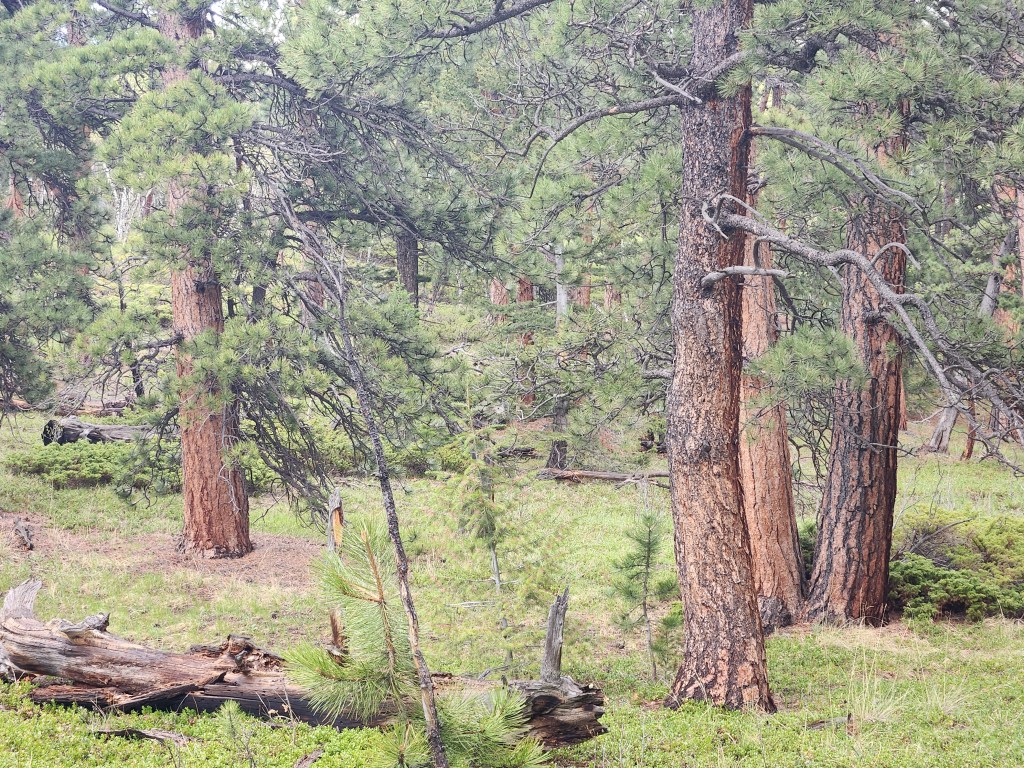
Tucker Open Space and Elk Draw are part of the Arapaho Ranch – Tucker Homestead Critical Wildlife Habitat, as designated in the Boulder County Comprehensive Plan. They are significant concentration areas for wildlife and nodes of high biodiversity. Their most unique components are the sizeable willow carrs and grasslands on the Arapaho Ranch and Tucker Homestead. These are “grocery stores” containing abundant forage, browse, water, small mammals and insects, which provide food for other animals. The immediate surrounding forests are also critical not only for habitat but also provide important hiding and thermal cover.
Subject properties are also on the west side of the Town of Nederland and there is a desire to conduct wildfire mitigation. In my opinion, it is questionable if the mitigation will be successful as the worst fires will be driven by strong west winds. Removing vegetation and other components of the forest (live trees, snags, deadfall and shrubs) tend to simplify the forest structure: high structural diversity and foliage volume have been associated with high avian species diversity. Removal of trees and shrubs can also result in less hiding cover.
The following comments pertain to proposed wildfire mitigation activities to the upper Tucker/Elk Draw area:
- Because of the Critical Wildlife Habitat designation, there should be a high priority to retaining the ecological values of the site.
- Maintaining hiding cover will be important on upper Tucker and Elk Draw. And if there is any public access to this area, hiding cover becomes even more important. The area is heavily used by elk in spring, as well as other seasons by elk, moose, deer and many mid-sized mammals (winter use is dependent on severity of the snow pack).
- Maintaining structural diversity of the vegetation is important to retaining high wildlife values. There should be an effort to retain significant amounts of low and medium sized shrubs, as well as seedlings and saplings that help provide good horizontal and vertical diversity of the vegetation. I recognize that these ecological components are viewed as “ladder fuels” for wildfire mitigation. The habitat becomes more simplified as structural components are removed.
- Minimize the use of vehicles off of the central road to reduce disturbance to soils and the complex below ground ecosystems of mineral and organic matter, roots, various types of mycorrhizal fungi, bacteria, insects and a host of other organisms. It can take decades for these soils to develop and evolve, but when intact, they help support the living vegetation, are harder to erode, help retain moisture, and resist invasive weeds.
- Maybe there should be a progression in mitigation intensity, with the most intense actions taken on the forests of the west side of Nederland and the 40-acre USFS parcel. Mitigation actions on Elk Draw and Tucker may want to focus more on coarse woody debris on the ground (debris from past management actions and deadfall), though retaining some debris on the forest floor is advised. Retain snags and some of the larger deadfall.
- There should be a spring closure of this area and probably all of Tucker to protect elk spring and calving activities, much like how Caribou Ranch Open Space is managed where the same activities occur (April 1 – July 1 closure). A full closure of this upper Tucker and Elk Draw area for habitat protection could be warranted but will be influenced by how the remainder of Tucker is managed for public use.
- A number of Boulder County Avian Species of Special Concern are present on this portion of Tucker/Elk Draw and appear to be regular breeders : Olive-sided Flycatcher, Golden-crowned Kinglet, Virginia’s Warbler, American Three-toed Woodpecker, Band-tailed Pigeon, Pine Siskin, and Northern Flicker. I have been conducting bird inventories on Tucker Homestead for 44 years and can provide GPS information on most recent territories.
- There is some old, dilapidated fencing in this area. It would be great if it could be removed and replaced by wildlife friendly fencing where needed for property demarcation.
Thank you for consideration of these comments.
Eco-Integrity Alliance comments:
8/9/25 comments on “Scope of Work”
Since Boulder County’s main goal for the Middle Boulder Creek Fuels Reduction Project—to “reduce the risk of severe wildfires”—will NOT be met by the county’s own admission in the Scope of Work, Eco-Integrity Alliance asks that the taxpayer-funded, ecologically harmful experiment be canceled.
Scope of Work:
“The treatment is not expected to stop a fire, nor does it guarantee any specific outcomes under all fire weather conditions. It is anticipated that up to the level of moderate fire conditions, fire personnel may be able to engage directly with a fire within the treatment area. If extreme fire conditions are present and fire personnel cannot directly engage the fire, treating this area increases the opportunity for, and effectiveness of, aerial suppression efforts such as water and retardant drops.”
That aside, Eco-Integrity Alliance is disappointed to see that Boulder County did not appear to alter any of its cutting plans in the Scope of Work despite the overwhelming majority of public comment (10/14 or 70%) offering critique based on peer-reviewed science. The other four comments either perpetuated false, misleading, or at best scientifically disputed opinions or ignored the fire issue altogether.
There are too many false, partially true, or misleading statements along with opinions disguised as facts in the Scope of Work (SOW) to address all of them in these comments, yet enough to determine that the burden of proof has not been sufficiently met for this ecologically-harmful and potentially dangerous experiment to move forward.
Although the evidence suggests to us that Boulder County is uninterested in the full spectrum of peer-reviewed science and public opinion when it comes to using our tax dollars to cut down our public forests, we’ll respond to certain parts of the SOW to have this on the public record.
Scope of Work:
“The primary goal of forest management at Tucker Ranch and Elk Draw is fire mitigation with the additional goal of forest resilience. The area has experienced fire in the past as evidenced by numerous fire scars and will experience fire again in the future. Treatments on the property will aim to foster an ecosystem that is able to accept fire in a less catastrophic way.”
The SOW ignores the vast body of peer-reviewed studies finding “fuel reduction” to be ineffective or even counterproductive at reducing fire severity.
Boulder County even ignores the findings of the two most relevant local studies that dispute the idea that cutting forests will reduce wildfire severity, much less protect communities.
1) FOURMILE CANYON FIRE FINDINGS
United States Department of Agriculture / Forest Service Rocky Mountain Research Station (August 2012)
“No evidence was found that the progression of the Fourmile Canyon Fire was altered by the presence of fuel treatments and the treated areas were probably of limited value to suppression efforts on September 6.”
“The changes in fire activity in this area were apparently a result of changing weather (increases in air humidity and decreases in wind speed, see Figure 28) and topography (northerly aspect) rather than any changes in forest structure and composition resulting from a fuel treatment.”
“Note the areas where the fuels were treated along the “Escape Route” were burned more severely than neighboring areas where the fuels were not treated.”
2) “Fuels treatments and their impact on carbon stocks and fire severity in Boulder and Jefferson Counties and the City of Boulder” by climate scientist Brian Buma, Ph.D. and Erin Twaddel from University of Colorado and research scientist Anthony Vorster from Colorado State University in Fort Collins, found in forest plots previously “thinned” in the name of “wildfire mitigation” by Boulder County Open Space and other entities, a “lack of clear effectiveness of the treatments at increasing surviving live biomass when exposed to a wildfire.”
Study authors theorize “partially that the high ground fuel loads and decreased tree density led to increased fire intensity as a result of easier wind movement, an unintended consequence seen in the 2010 Four Mile fire as well.”
Scope of Work:
“The treatment is not expected to stop a fire, nor does it guarantee any specific outcomes under all fire weather conditions. It is anticipated that up to the level of moderate fire conditions, fire personnel may be able to engage directly with a fire within the treatment area. If extreme fire conditions are present and fire personnel cannot directly engage the fire, treating this area increases the opportunity for, and effectiveness of, aerial suppression efforts such as water and retardant drops.”
It’s frustrating how the main thrust of Boulder County’s “mitigation” is “community protection,” yet even the studies that show some reduction of fire severity during moderate or low intensity fires—which are usually easily contained and do not pose much of a threat to communities—candidly acknowledge that they do not reduce the spread of wildfire, as does this Scope of Work: “Finally, fuel treatments generally are designed to mitigate wildfire intensity and effects but they are not necessarily intended to impede fire spread or reduce fire size.” (Adapting western North American forests to climate change and wildfires: 10 common questions by Prichard et al., 2021)
Yet “community protection” from wildfire is the main selling point behind these “treatments” to the public, media, elected officials, and government agencies, and it is undoubtedly why this experiment was funded and is still moving forward at this time. That funding could instead be put towards proven-to-be-effective home hardening and defensible space pruning 100 feet around homes adjacent to Tucker Ranch as well as patrolling of the area to discourage human-caused wildfire, the source of 84% of wildfires.
Scope of Work:
“Additionally, opening up the canopy will enhance understory vegetation, both in species richness and cover, leading to more grasses, forbs, and shrubs that quickly regrow after a fire, which helps to stabilize the soil post fire.”
The SOW acknowledges that this tree removal will INCREASE flammable vegetation, particularly that more likely to spread fires most quickly.
The study, “The fastest-growing and most destructive fires in the US (2001 to 2020),” by Jennifer K. Balch et al. from CU Boulder, analyzes 60,000 fires across forests and grasslands. It concludes that the most rapid wildfires—such as the nearby Marshall Fire—occurred in grasslands, not forests, which “highlights the role of fine, flashy fuels and low wind friction,” not trees.
Scope of Work:
“TPA [Trees Per Acre] will decrease from approximately 683.79 to approximately 356.28, with a 49.9% reduction in trees per acre for DBH classes 0-8 and 26.2% reduction in trees per acre for DBH classes 8-16.”
Despite the local forest not being out of its historical range of fire return interval (see proof of that below in our previous comments), the county wants to remove between one quarter to one half the forest cover at Tucker Ranch, including trees up to 16 inches in diameter.
At the public meeting on August, Boulder County Open Space’s Scott Golden said “I want to remove as much material as I can” from Tucker Ranch.
Scope of Work:
“WindNinja, a wind modeling program, was used to assess areas with heavier wind load by running the program using weather data from some past high wind advisory days.”
While the wind modelling shows which areas are CURRENTLY most impacted by wind, the SOW does not include any data on the potential increase in wind spread due to forest cutting. Nor the likelihood of that increased wind spreading fire more quickly to adjacent homes and the Town of Nederland, which can threaten not just structures, but evacuees and firefighters.
As aforementioned, we’re including our previous comments below, since none of them appeared to have been addressed in the SOW. Once again, we ask that this experimental project be canceled and the taxpayer funding be allocated to actions proven to actually protect communities from wildfire.
***
Comments prior to “Scope of Work”:
Eco-Integrity Alliance opposes the proposed “Middle Boulder Creek Fuels Reduction Partnership Project” on the newly acquired 104-acre Boulder County Open Space property of Tucker Ranch and Elk Draw west of Nederland, Colorado. We also oppose any tree removal in the adjacent 43-acre Roosevelt National Forest parcel. While we don’t have a position on activities on the privately-owned Arapaho Ranch, we oppose the use of taxpayer funding for any purposes beyond home hardening and/or defensible space pruning up to 100 feet around structures.
Eco-Integrity Alliance does not believe that Boulder County has met the burden of proof in its claims that the tree removal at Tucker Ranch will address “wildfire risk” and/or “public safety.” To the contrary, it appears the County has completely ignored: several hundred peer-reviewed studies by hundreds of scientists concluding that cutting forests to supposedly protect communities from wildfire is often ineffective or even counterproductive; abundant evidence from U.S. Forest Service reports showing the same thing; as well as Boulder County’s own 2022 study finding a “lack of clear effectiveness of the treatments at increasing surviving live biomass when exposed to a wildfire,” and surmising “partially that the high ground fuel loads and decreased tree density led to increased fire intensity as a result of easier wind movement…”
Any arguments that forests at this upper montane elevation (7,500-9000’) are “overcrowded” or “overly dense” due to fire suppression are false and fully refuted by the consensus of peer-reviewed science. Indeed, even the U.S. Forest Service acknowledges that lodgepole pine stands have a fire return interval of 300-600 years.
Additionally, Boulder County’s management plan for nearby Caribou Ranch (about 2 miles as the crow flies) reaches the conclusion that “today’s forests are within the historical range of variability.” The County admits that “regional climate appears to be the most important factor in the large-scale forest fires that influence this area rather than the buildup of fuels” and cautions how “thinning lodgepole pine and spruce-fir forests tends to simplify the forest structure and removes important ecological components.”
Aside from the County seeming to disregard any and all science that doesn’t promote cutting in the name of wildfire—including its own 2022 study “finding a lack of clear effectiveness” of “fuel reduction” in reducing wildfire severity—Eco-Integrity Alliance has ongoing concerns about the lack of meaningful public engagement for “managing” Tucker Ranch.
Before even discussing the issue with the public, the County had already decided the property would be logged and set a date only six months after its official announcement. A more democratic approach would’ve been to publicly propose the idea of “fuel reduction” immediately upon the County’s acquisition of Tucker Ranch, and then allow comment BEFORE deciding to cut, much less setting a date for the cutting.
Due to Boulder County’s ongoing refusal to include the full body of science and public opinion into its taxpayer-funded public lands decision making process, Eco-Integrity Alliance calls for a moratorium on all forest cutting on Open Space lands until this changes.
In conclusion, it’s important to understand the larger context of aggressive “fuel reduction” logging at Tucker Ranch. While the ecological and climate value of this local parcel is crucial, the “Middle Boulder Creek Fuels Reduction Partnership Project” is simply one of countless examples of the degradation of public lands across the U.S. in the name of “wildfire.”
If the U.S. is going to meet its responsibilities under the Global Biodiversity Framework of protecting 30% of world ecosystems by 2030 and 50% by 2050—as well as CO2 emissions targets under the Paris Agreement—all federal, state, county, and municipal public lands must be set aside as Biodiversity & Climate Reserves off limits to extraction. If Boulder County, the most progressive County in Colorado (if not the U.S.), not only refuses to protect its existing public lands, but is purchasing new lands to log them, we are rushing headlong into what may be irreversible ecological unraveling.
High Country Forest Watch comments:
The thriving ecosystem of Park Hill/East Tucker Ranch needs logging like a fish needs a bicycle. A site visit there took us only to a National Forest lodgepole stand screwed up from the last cut. It was full of leftover slash and blowdown from letting in the wind. The handout we received showed this and said it needed treatment because it was “collapsing” into heavy fuel loads. Collapsing because of a typical sloppy cut that makes more woody debris than it takes out. The picture even showed cut logs reminiscent of this (see photo below from news report “Forest Service caught using misleading photo“):

It also uses the politics of fear to support logging. But dead trees have great ecological value; we don’t hear much about that. The “dead trees are evil” message has led to landowners just dropping terrific snag and cavity trees to the detriment of birds and other wildlife.
Beyond the lodgepoles are perfect meadows, seeps, spruce and fir microhabitats and wonderful old growth. I view this as a land barely stabilizing and in recovery from past abuses – and should not be disturbed again.
Since Nederland has taken very hard hits of 80 acre clearcuts in our treasured places (West Mag, Kelly Dahl, Reynolds Ranch) – and Boulder Watershed Collective is logging many private land areas – the mosaic of landscape scale land use that foresters talk about should indicate a very light touch here. This should be a Critical Wildlife Habitat Area with no public entry. Because nature will benefit – and humility and accepting limits are good for us.
Save Boulder Parks & Trails comments:
My name is Julie Smith. I live in the City of Boulder, and I’m director of the grassroots group, Save Boulder Parks & Trails. I’d like to comment on the “Middle Boulder Creek Fuels Reduction Partnership Project” proposal for Tucker Ranch in Nederland, which is now a part of Boulder County Open Space.
Unfortunately, the effectiveness of this tree-cutting for “wildfire mitigation” is disputed by an abundance of scientific studies, including one financed by Boulder County and City of Boulder in 2022.
This study found, in forests already “thinned” by Boulder County in the name of wildfire mitigation, a “lack of clear effectiveness of the treatments at increasing surviving live biomass when exposed to a wildfire.”
The authors of the study suggest the reason for this is “partially that the high ground fuel loads and decreased tree density led to increased fire intensity as a result of easier wind movement, an unintended consequence seen in the 2010 Four Mile fire as well.”
Here is the study info: “Fuels treatments and their impact on carbon stocks and fire severity in Boulder and Jefferson Counties and the City of Boulder.” 25 January 2022 Authors: Brian Buma1 , Anthony Vorster2 , Erin Twaddell 1. University of Colorado, Denver. Brian.Buma@ucdenver.edu & Erin.Twaddell@ucdenver.edu 2. Colorado State University, Fort Collins. Anthony.Vorster@colostate.edu
Since the County’s own study and countless other peer-reviewed studies challenge the goals of this project, we ask that plans to remove any trees in Tucker Ranch be set aside until the conflicts in the scientific literature are properly resolved with full community engagement.
Magnolia Forest Group comments:
Thank you for the opportunity to provide comments on the Tucker Ranch Project.
The following are some of the points we have concerns about:
- Firstly is the severe lack of detailed project information available to the public to comment on. We would like to see a draft plan, such as the USFS provides, for further public comment. It is exceptionally hard to provide feedback when we are missing important project details to comment on such as the location of cover types on the map, where certain treatments will be implemented in the project area, the maximum DBH cap (if there is any), and the proposed BA reduction.
- This area is designated as critical wildlife habitat and a full management plan should be developed and approved before any projects are undertaken here. We seem to be putting the horse before the cart here.
- We are concerned about the potential for further recreation in the Tucker Ranch area following project implementation with particular regards to mechanical equipment. If skid roads are not obliterated and blocked off (which is very hard to do in this area) they often become new recreation routes for bikers, hikers and off roading. If slash is used to cover these skid roads you have simply rearranged fuels and are now contributing to the surface fuel problem you are trying to address. Additionally mechanical equipment often leaves nicks and scars on the remaining trees that never disappear. We strongly support the use of manual treatment for any location off of the existing road.
- Treatments, in particular lodgepole patch/clear cuts, need a plan for follow up maintenance before the initial project is undertaken. Ideally this would be some form of regen thin for lodgepole, or prescribed burn for other cover types. Without follow up maintenance the long term result of your project will likely be an increase in surface and ladder fuels and an increase, rather than reduction, in wildfire risk.
- Forest management has questionable effectiveness under wildfire conditions, especially with high wind (which is very common in Nederland, and typically underestimated in percentile severity models), and without prescribed burns (which are not currently part of the plan).
- Treatment should not take place in any spruce/fir cover types. These are often dense, wet forests. Though they have a higher fuel loading they are much less likely to burn than drier, more open areas. If you do treat these areas you open them up to drying and increased opportunities for embers to enter. As a result you increase the risk for wildfire (i.e. a larger window of conditions under which they will burn), even while reducing fuel. Along these lines there has been very little research done to date on managing these forests, and nothing that conclusively supports management as a good idea.
- Some existing snags and corse woody debris should be left for wildlife habitat while focusing on removing already dead and downed trees in areas of wind throw to address fire mitigation.
- We would also like to echo Dave Hallock’s concerns for maintaining cover, in particular for the elk herd, which uses this area as a major east-west corridor. For the specific migration corridor mapped by CPW we would like to see minimal treatment of forest that provide cover for the elk (typically, but not exclusively, young Doug fir with low, broad branches).
- We also support the general concept of reducing the intensity of treatment and shifting to a stronger focus on ecological values the further from the town boundary you move.
- There have been conflicting statements made about putting firefighters into this area during a wildfire. During extreme wildfire weather, which is the most likely condition under which this area would burn, it should be considered whether or not it is realistic to consider putting firefighters in here, or if more realistically they will be tasked with evacuating Nederland.
We support the following practices that were outlined on the May field trip, and hope to see them put into writing:
- That there will be no treatment undertaken in pockets of spruce.
- Other tree types of an age not prone to blow down will be kept within lodgepole patch/clear cuts.
- Limber pine will be protected (i.e. not cut).
- Work will be carried out over the winter to reduce the impact of the equipment on the soil and the affect of cutting on nesting and migrating birds. (Note: we do have concern that with potentially warm winters mechanical equipment will still compress the soil, and potentially even be tracked through muddy soil. Operation limits should be put in place not just for timing, but for conditions on the ground).
- It’s good to hear Boulder County is contact with CPW for their elk collaring data, and has intent to use the data in real time to stop work while the elk are in the area.
- Slash management is very important for any project. We support removing slash offsite where possible, and pile burning where not so long as it doesn’t result in high mortality of the remaining live trees.
- Avoiding treatment in areas with moist soil, and old growth or fire scared lodgepole pine.
- Working to close social trails known, or discovered during the project given that this is an area of great importance for wildlife.
- Acknowledging that any treatment in this area has a limit and will be ineffective in the top 3-5% of conditions.
Again we hope to see a more formal plan for the Tucker Ranch Project for the public to comment on before any final decisions are made.
 Colorado Public Lands Collaborative